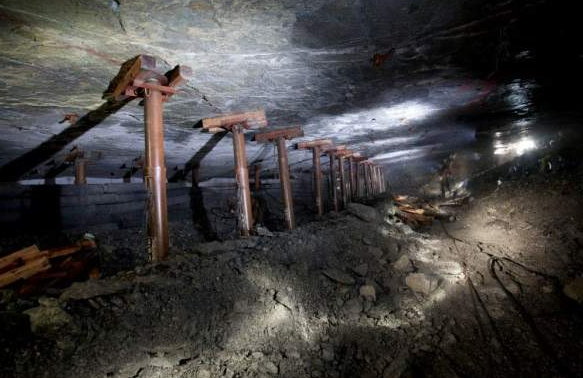

Climb a pull-down ladder into a Houston attic on an August afternoon and the air hits like an open oven. Temperatures up there can push well past 140 degrees, and most homeowners shut the hatch and forget about it. The roof never gets that luxury. Trapped heat and sticky Gulf moisture work on the shingles and decking from underneath every day, long before a storm shows up to take the blame.
Plenty of the problems that crews like GreenLight Roofing get called out to diagnose across Katy, Cypress, Spring and greater Houston trace back to this hidden side of the roof. The company carries GAF and CertainTeed certifications and handles repairs, inspections, shingle and metal installs, gutters and insurance claim support. Yet even roofers with that background will tell you the attic decides much of what a roof looks like on the outside.
Shingles Caught Between Two Heat Sources
A shingle on a south or west slope already absorbs brutal direct sun. When the attic below is poorly vented, heat also builds against the underside of the decking, and the shingle effectively cooks from both directions. The asphalt slowly loses the oils that keep it flexible. It turns brittle, edges curl, blisters pop up, and granules wash into the gutters faster than they should.
Department of Energy guidance has long noted that a ventilated attic runs roughly 30 degrees cooler than an unventilated one. On a Houston roof, that gap can mean years of extra life. It also explains why major shingle makers write ventilation requirements into their warranty terms. A roof installed over a stuffy attic can lose coverage on a technicality most owners never read about until a claim gets denied.
Moisture That Has Nowhere to Go
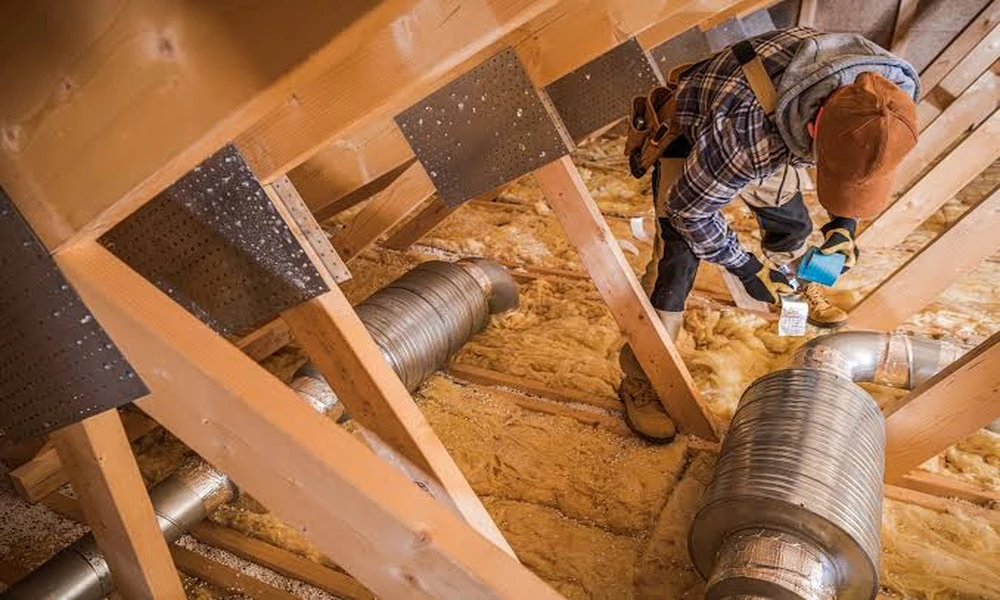
Heat gets the attention, but in this climate moisture is the sneakier partner. Houston air holds a lot of water for most of the year, and the attic is where much of a home’s mechanical life sits. Air handlers, ductwork, condensate lines and bathroom fan ducts all run through that space.
When cold supply ducts sit in hot, wet air, they sweat. Drips land on insulation and drywall, and ceiling stains appear that homeowners mistake for roof leaks. Bathroom fans that dump shower steam straight into the attic, instead of out through a proper roof or soffit cap, make things worse. Over time the plywood or OSB decking soaks up that moisture, softens, and starts holding nails poorly. A roof that should shrug off a tropical storm can lose shingles because the wood underneath gave up first.
Intake and Exhaust Need to Work as a Pair
A healthy attic breathes in low and out high. Cooler air enters through soffit vents at the eaves, warms as it rises, and leaves through a ridge vent or other exhaust near the peak. Texas follows the International Residential Code, which generally calls for one square foot of net free vent area per 150 square feet of attic floor, or one per 300 when intake and exhaust are balanced. The exact ratio matters less than whether the two halves actually cooperate.
The most common ways that cooperation breaks down are surprisingly ordinary.
- Blown-in insulation piled against the eaves, smothering the soffit intakes. ENERGY STAR singles out blocked eave airflow as the most frequent mistake people make when adding insulation.
- Ridge vents installed alongside turbines or a powered fan, so the exhaust points pull air from each other instead of from the soffits.
- Powered attic fans on homes with leaky ceilings, which drag cool conditioned air up through light fixtures and hatches.
- Soffit panels painted shut, swapped for solid boards, or packed with wasp nests over the years.
- Lots of exhaust and very little intake, a lopsided setup common on older ranch homes after decades of patchwork repairs.
Clues You Can Spot Without a Ladder
Most attic trouble announces itself in the living space first. Upstairs bedrooms that stay several degrees warmer than the rest of the house, an AC that never seems to cycle off, and power bills that creep up summer after summer all hint that the attic is holding heat.
Outside, compare how the slopes are aging. If the sun-facing side is curling and shedding granules while the shaded side still looks decent, ventilation deserves a hard look. Wavy lines across the roof surface can point to decking that swelled with moisture. Up in the attic, rusty nail tips poking through the deck, dark stains on the plywood and a musty smell are hard to argue with.
One clue gets misread constantly. The black streaks running down so many Houston roofs are usually algae, a cyanobacteria called Gloeocapsa magma that thrives in warm, damp weather. It’s worth treating, but it isn’t proof of a ventilation problem by itself. Algae-resistant shingles with copper-treated granules have become a sensible choice on new installs around the area.
The Sealed Attic Debate
A growing number of Houston homes skip vents entirely. Open-cell spray foam goes onto the underside of the roof deck, and the attic becomes part of the conditioned envelope. Ducts stop sweating, and the AC no longer battles a 140-degree space overhead.
It can work well, but it changes the roof’s rules. Foam can hide small leaks until the decking has already rotted. Shingles run somewhat warmer, and warranty language around unvented assemblies varies by manufacturer. Some buyers and inspectors also ask for proof the foam was installed correctly. Anyone weighing this route should get the roofer and the insulation contractor talking before anything gets sprayed.
Replacement Day Is the Best Opening
The cheapest moment to fix an attic’s breathing is when the old roof is off. With the decking exposed, crews can cut or extend a ridge vent slot, swap moisture-damaged sheets, pull conflicting turbines and patch the holes, and add baffles so every rafter bay connects to the soffits. Radiant barrier sheathing, now common on new Houston builds, can go in at the same time to knock down attic heat further.
When collecting bids, ask how each roofer plans to balance intake and exhaust, not just which shingle they recommend. The crew that climbs into the attic before writing an estimate usually understands that a roof is only as healthy as the space beneath it. In a city with long summers and heavy air, that hidden space ends up deciding how many good years the shingles above really get.